
February 11, 2026 | 4 minute read
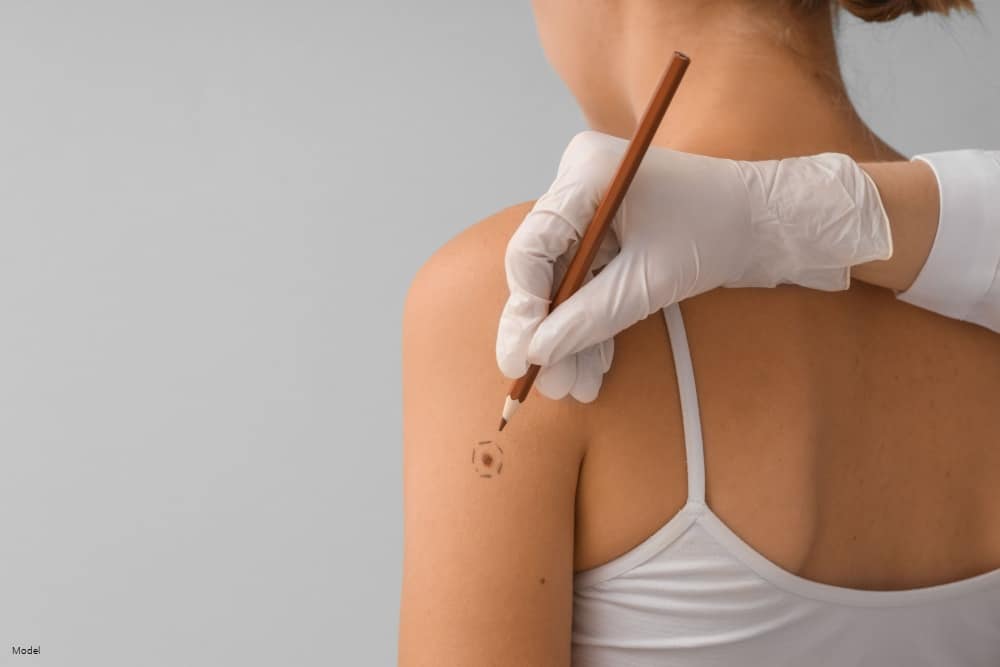
As one of the most dangerous of all the skin cancers, a melanoma diagnosis can be a scary one. Fortunately, survival rates for patients who discover their cancer early are very high, and rates are improving for those in the later stages. In this blog, we discuss treatment options at various stages and the importance of regular skin checks to detect skin cancer when it is most treatable.
Table of Contents
- What Is Melanoma?
- Early Detection for Curing Melanoma
- Treatment Options for Early Stage Melanoma
- Advanced Melanoma Treatment Options
- Can Melanoma Return After Treatment?
What Is Melanoma?
Melanoma is considered one of the deadliest types of skin cancer. It starts in melanocytes, which produce melanin that gives skin its color. When melanocytes mutate, the cancer cells begin multiplying while healthy cells die. Eventually, a tumor can develop and spread to other parts of the body if left untreated.
Early Detection of Melanoma
The earlier melanoma is detected, the more curable it is. Unfortunately, early-stage melanoma is easy to miss without regular skin checks at home and at your dermatologist’s office. Conducting a thorough mole check at home every three months can help you recognize any changes in your skin and report them promptly to your doctor.
As you perform your skin check, follow the melanoma ABCDEs:
- Asymmetry: Irregular, uneven, or lopsided moles may be a concern.
- Border Irregularity: If a mole’s borders are notched, ragged, or blurred, see your doctor.
- Color Variation: Follow up on moles that have multiple colors or change color.
- Diameter: Moles larger than 6 mm or those that grow over time should be checked.
- Evolving: See your doctor for any changes in a mole’s size, shape, or color.
Treatment Options for Early Stage Melanoma
In many cases, early-stage melanoma can be surgically excised without the need for additional treatment. Surgical excision can be performed under local anesthesia in your doctor’s office. Smaller tumors also tend to yield the best cosmetic results with minimal visible scarring, as long as an experienced dermatologist performs the excision.
If your melanoma has spread (known as metastatic melanoma), you may need radiation therapy in addition to your surgical excision. Your doctor may also do a biopsy or ultrasound of your lymph nodes to determine whether the cancer has spread into surrounding areas.
Advanced Melanoma Treatment Options
Advanced melanoma may require additional surgery. When surgery is insufficient, patients may be candidates for these innovative treatments:
Targeted Therapy
Targeted therapies are another new treatment area that shuts down mutated cells to slow cancer growth without harming healthy cells. Targeted therapy focuses on genetic mutations in the BRAF and MEK proteins, which are molecules that help regulate cell growth. By blocking these proteins, the treatment can slow or halt melanoma growth.
Can Melanoma Return After Treatment?
Yes, melanoma can recur at the original site or in a different location. Thicker tumors and later stages of melanoma are more likely to recur. To reduce the risk of recurrence after your initial melanoma treatment:
- Use daily sunscreen to protect your skin from UV rays
- Perform monthly self-examinations
- Call your doctor immediately if you notice any skin changes
- See your dermatologist for regular skin cancer screenings
- Contact your doctor if you experience new symptoms like a cough or swelling
Your doctor will help you create a prevention plan based on your specific situation. Most recurrences occur within the first few years, but some can occur as late as 5–10 years after the initial diagnosis.
Concerned About Melanoma in Scottsdale and Maricopa?
Melanoma is a scary diagnosis, but you can take steps to keep your skin healthy and increase your odds for early detection. To schedule your skin screening with one of our doctors, call Better Skin Dermatology today at (480) 596-1110 or complete our online contact form.