
February 10, 2026 | 4 minute read
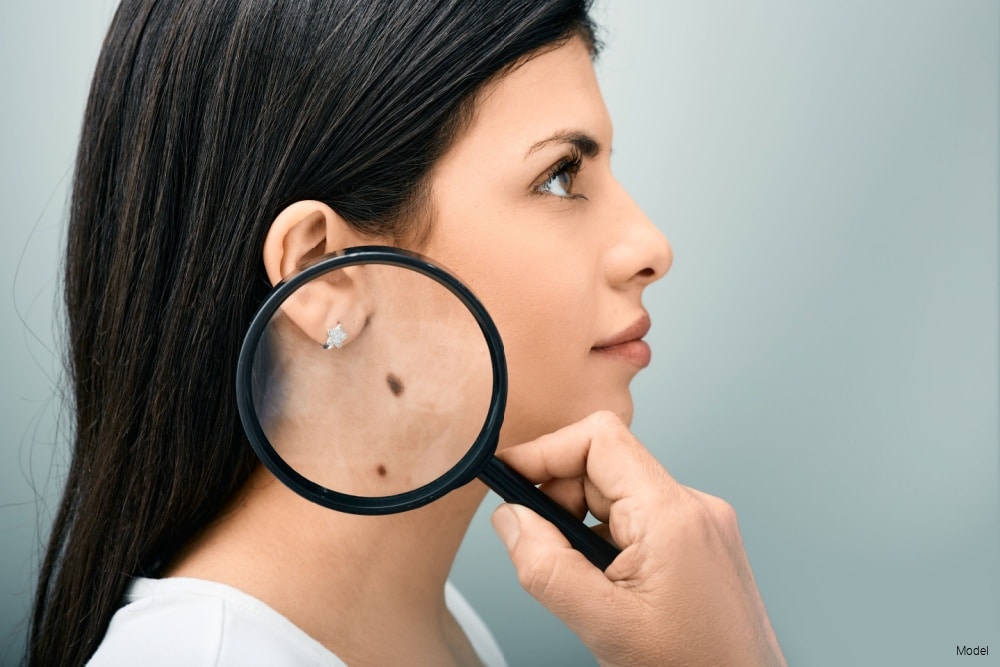
Melanoma is the most dangerous type of skin cancer, but early detection is key to effective treatment and eliminating the cancer before it spreads. Here, we’ll discuss what early-stage melanoma looks like to help you identify suspicious skin changes when melanoma treatmentis most successful.
How to Identify a Melanoma Mole
Melanoma moles come from melanocytes, skin cells that produce melanin. Melanin is a natural pigment that protects your skin from the sun’s UV rays and adds color to your skin, eyes, and hair. When melanocytes mutate, they can form a tumor, which usually first appears as a brown or black spot. However, melanomas can also develop as a pink, red, or skin-colored mark on the skin.
Nearly one-third of melanomas develop in existing moles, leading to changes in the mole’s structure and appearance over time. The rest occur in healthy skin, often appearing as unusual spots or lesions. When detected early, the melanoma survival rate is 99%, which is why regular skin examinations and dermatologist visits are critical for successful treatment.
Where Can Melanoma Cancer Symptoms Appear?
Melanoma can appear nearly anywhere on your body, including in your eyes (ocular melanoma), mouth (oral melanoma), or under your nail beds (subungual melanoma). Men tend to find them mostly on their trunk, often located on the upper back. Women may be more prone to melanoma on the legs. However, any new or unusual skin mark should be checked by a dermatologist, regardless of location.
Learn The ABCDEs of Early Stage Melanoma Cancer
The American Academy of Dermatology (AAD) developed the ABCDEs of melanoma to help individuals perform skin examinations at home. Call your dermatologist right away if you notice any of the following on any skin spots or moles:
A: Asymmetry
Healthy moles are symmetrical in shape (usually round or oval) and color, meaning that if you draw a line down the middle, both sides of the mole should look the same. If a mole is darker, raised on one side, or has a different shape, it could indicate melanoma.
B: Border Irregularity
Normal moles have smooth, easily defined edges. A melanoma often has an irregular border that may appear notched or ragged. The border may also be blurred or spread into the surrounding skin.
C: Color Changes
Moles may appear in various colors, including black, brown, and red. However, uneven colors with multiple shades may indicate early-stage melanoma. You might notice areas of tan, white, gray, red, or blue mixed in with the original color of the mark.
D: Diameter
Because melanoma moles tend to grow, any lesion larger than 6 millimeters (about the size of a pencil eraser) should be checked promptly. If you notice any skin lesions getting bigger, even if they haven’t reached that length, make an appointment with your dermatologist.
E: Evolving
The most crucial factor to remember when examining your skin is evolution or changes to markings. If you have a mole that suddenly looks different in shape, color, or size, it may indicate early-stage melanoma. New symptoms, such as crusting, itching, or bleeding, may also be a concern. Finally, new lesions, moles, or spots should be seen promptly by a dermatologist.
What is the Ugly Duckling Test?
Melanoma moles can be tricky to identify, so the more tools you have at your disposal during your self-examinations, the better. Beyond the ABCDEs, you can also apply the Ugly Duckling rule to discover potential warning signs. This strategy looks for moles or lesions that stand out from the rest, like an ugly duckling.
The Ugly Duckling rule helps you focus on comparing skin spots and checking for possible irregularities. If you find a lesion that is larger, darker, or isolated without other surrounding moles for comparison, you should have these “ugly ducklings” checked by your dermatologist.
Have More Concerns About Melanoma in Scottsdale and Maricopa?
Melanoma is a frightening diagnosis, but catching it early enhances your odds for a complete cure. To learn more about melanoma moles or schedule a full skin check, contact Better Skin Dermatology at 480-596-1110 or fill out our online contact form today.